
EORTC celebrates Rare Disease Day
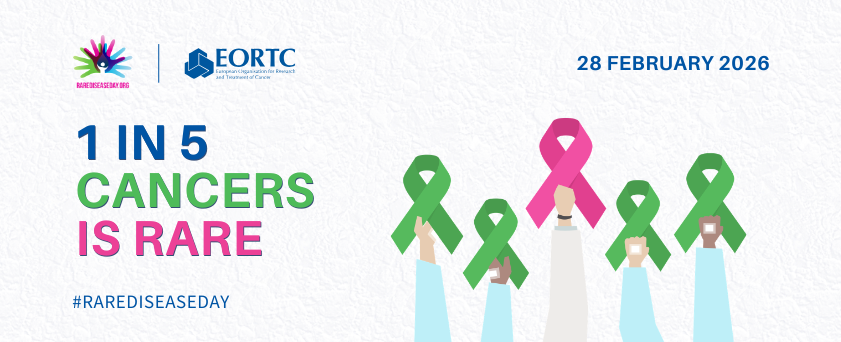
Rare cancers are a major public health challenge. Each one affects fewer than six people per 100,000 per year, but together they make up about one in five cancer diagnoses in Europe. They also have lower survival rates and account for roughly one in three cancer deaths.
On 28 February 2026, EORTC joins organisations worldwide in coming together to mark Rare Disease Day 2026 calling for equal access to diagnosis, care, and treatment for people living with rare diseases.
Supporting patients with rare and ultra‑rare cancers — who often face limited treatment options — remains a key priority for EORTC in 2026 and beyond.
How EORTC makes a difference
Rare cancers are often aggressive, overlooked, and without clear treatment options.
EORTC advances rare cancer research through its Rare Cancers Task Force, innovative platforms like SPECTA, and several active clinical studies. Together, these efforts deepen understanding, open up new treatment possibilities, and generate evidence that directly improves care for patients with rare and ultra‑rare cancers.
Our dedicated rare cancer groups — working in areas like rare brain tumours, sarcoma, cutaneous lymphoma, uveal melanoma, and head & neck cancers — are united by one mission: to give patients with rare cancers more hope and better options.
SPECTA
EORTC created and runs SPECTA platform a Europe‑wide system that brings together clinical and molecular screening programmes. It gathers biological samples and medical information from people with cancer across many countries.
By analysing these samples, it can spot genetic changes, even in very rare cancers, that might be useful for developing new treatments. SPECTA also helps match patients to clinical trials that fit the specific molecular features of their cancer.
Research Active Today: Clinical studies offering hope now
Your support ensures that EORTC continues driving research that gives patients with rare cancers a better chance and a path forward.
Uveal Melanoma (Rare Eye Cancer)
ATOM Trial – The only active Phase 3 trial worldwide testing a treatment (tebentafusp) that may help stop this rare eye cancer from coming back after surgery.
For patients who currently have almost no options, this trial brings real hope.
Rare Brain Tumours
GLIORARE Study – Helps doctors understand how best to treat newly classified rare brain tumours and improve outcomes for patients facing a devastating diagnosis.
Amongst other funders and supporters, this study benefited from a contribution raised as a result of an ETC cycling fundraiser in September 2025.
Cutaneous T-Cell Lymphoma (Rare Blood Cancer Affecting the Skin)
MOGAT Trial – Tests whether combining a targeted therapy with specialised radiotherapy can offer patients a gentler, more effective treatment.
For many, this could mean better control of the disease and a better quality of life.
Oligometastatic Rare Cancers
OligoRARE Trial – Studies whether adding precise radiotherapy to standard treatment can help patients with only a few metastases live longer and feel better.
Retroperitoneal Sarcoma (Aggressive, Rare SoftTissue Cancer)
STRASS 2 study– Compares two treatment pathways to see which one gives patients the best chance of controlling the disease and surviving longer.
Proven Impact: Research That Has Already Changed Lives
1. Prolonging Lives
Your support helps generate evidence that gives patients more time — something that is especially vital in searching for answers to complex questions linked to rare cancers:
- CATNON trial (anaplastic glioma)
Showed that adding chemotherapy after radiotherapy helps patients with this rare brain tumour live longer. For families facing a deadly diagnosis, this can mean more time spent with loved ones and more life.
- Gastrointestinal stromal tumours (GIST) research
Demonstrated that the targeted therapy imatinib can keep advanced GIST under control for many years.
Some patients now live 10 years or more after starting treatment — once unimaginable for this rare cancer.
- EORTC 26981/22981 trial
This study changed the way glioblastoma is treated by showing that adding chemotherapy (temozolomide) after surgery and radiotherapy helps patients live longer. It also discovered the first biomarker that can predict which patients are more likely to benefit from treatment, paving the way for more personalised care.
2. Improving Treatment Strategies
Your support helps ensure rare cancer patients receive better, more personalised care.
- Sarcoma trials
Large EORTC studies helped clarify when chemotherapy is effective and guided the best use of systemic therapies.These pathways give doctors around the world clearer pathways and a better chance at patient recovery.
- CREATE trial (inflammatory myofibroblastic tumour)
Showed that the targeted therapy crizotinib can control this extremely rare tumour over the long term, particularly when surgery is not possible.
For patients who have exhausted all other options, this gives a vital lifeline.
To explore more of EORTC’s achievements and impact across different tumour types, visit our Impact webpage, which highlights our practice-changing research and clinical advancements in rare and common cancers.
You can also help support EORTC’s game-changing clinical research to unleash scientific breakthrough and transform cancer patients’ lives. Learn how to GET INVOLVED, or Make a Contribution Now.




Get Social