
World Cancer Day 2025: EORTC’s commitment to older patients 4 Feb 2025
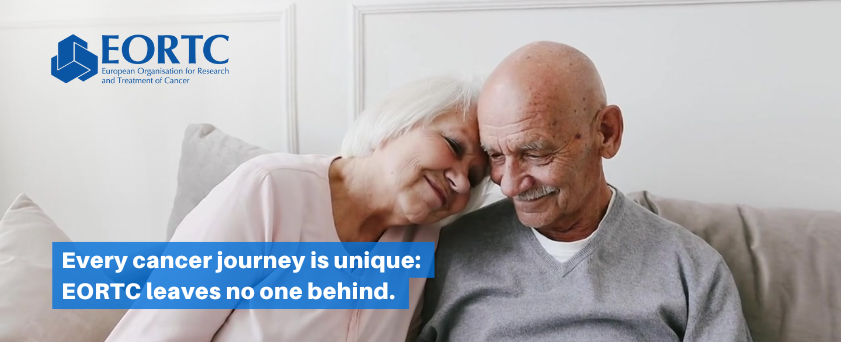
The theme of this year’s World Cancer Day “United by Unique” reflects the massive progress that has been made in tailoring treatment to individual patients over the past thirty years. Advances in genetic profiling have made it possible to offer treatments that are both the most effective in attacking the tumour and the least harmful in terms of side effects. But there is one group that, until recently, has tended to miss out on these advances – the older adults.
Given that cancer is primarily a disease of old age, it may seem strange that there has previously been so little attention given to optimising cancer therapies for such patients. Older patients have historically been limited or even excluded from trials of new treatments for several reasons. They tend to have more comorbidities, they may be frailer than younger patients, and their support systems may be more limited.
EORTC’s focus on patient-centred research and care rather than drug-centric research has revealed that treatments for younger patients are often not used effectively in older adults.
“Older patients represent the largest segment of the worldwide population with cancer, and as such should be the first target for treatment optimisation,” says EORTC Chief Executive Officer, Dr Denis Lacombe. “We are committed to addressing their needs through a number of innovative programmes.”
EORTC has also conducted practice-changing studies in older patients, for example in glioblastoma, an aggressive form of brain cancer. The study revealed that certain older patients did not benefit from the standard treatment with temozolomide (TMZ) but needed more personalised therapies. A study (EORTC 75111-10114) specifically addressed to older, frail patients with HER2-positive advanced breast cancer evaluated dual anti-HER2 treatment. Results showed that adding metronomic oral cyclophosphamide to target therapy with trastuzumab plus pertuzumab increased progression-free survival by seven months. Even though most patients eventually died, those who received the three-drug combination lived longer with accepted quality of life.
One of the most important factors when looking at treatments for older cancer patients is balancing their quality of life with the effectiveness of the therapy. EORTC has developed a tool, the QLQ-ELD14 scale, to specifically cover the quality of life issues of older patients with cancer.
Looking to the future, the EORTC Older Adults Council chaired and co-chaired by Lissandra Dal Lago and Paolo Bossi, respectively, has been established specifically to promote clinical and translational research in older people and aims to ensure that older adults are adequately represented in clinical trials. Currently the Council is leading research on identifying a frailty index for older patients that may be implemented in clinical trials and used to define his/her tolerance to treatment.
“Our goal is to study new tools and their use and to share information among oncologists about how these tools can be used to predict toxicities, to identify frailties in the older cancer patient population, and to understand how different treatments behave in different cancer settings in the population. This presents many challenges, but we are determined to continue to provide the best possible treatment for these previously neglected patients,” they say.
You can also help support EORTC’s game-changing clinical research to unleash scientific breakthrough and transform cancer patients’ lives. Learn how to GET INVOLVED, or Make a Contribution Now.




Get Social